Robertson County Dog Registration Information
Service Dogs and Emotional Support Animals in Robertson, Tennessee
If you’re asking where do I register my dog in Robertson County, Tennessee for my service dog or emotional support dog, the most important thing to know is this: service dog legal status and emotional support animal (ESA) status are not created by buying a “registration” online. In real life, most “registration” tasks in Robertson County are handled through local dog licensing and rabies enforcement—typically through animal control and, in some situations, city government within the county.
This page explains how a dog license in Robertson County, Tennessee generally works, how rabies vaccination fits into licensing, and how to avoid confusing a local license with service dog rights under the ADA or housing rules for emotional support animals. You’ll also find a practical list of official offices to contact if you’re trying to figure out where to register a dog in Robertson County, Tennessee—especially if you live inside a city limit such as Springfield.
Where to Register or License Your Dog in Robertson County, Tennessee
Because dog licensing and rabies tag enforcement are often handled locally, the right office depends on whether you live in the county (unincorporated areas) or inside a city limit (such as Springfield). The offices below are examples of official agencies that may handle animal control dog license Robertson County, Tennessee questions, rabies compliance, impound/reclaim requirements, and local ordinance enforcement.
Official Offices (Examples)
| Office | Address | Phone | Office Hours | |
|---|---|---|---|---|
|
Robertson County Animal Control
County-level animal control / shelter
|
2900 West County Farm Road
Springfield, TN 37172
|
Not listed here
|
Not listed here
|
Not listed here
|
|
Springfield Animal Control (City of Springfield)
City animal control / ordinances
|
507 Industrial Drive
Springfield, TN 37172
|
(615) 384-9289
|
Not listed here
|
Not listed here
|
|
Robertson County Health Department
Public health (rabies guidance, records, community resources)
|
800 South Brown Street
Springfield, TN 37172
|
Not listed here
|
Not listed here
|
Not listed here
|
|
City of Greenbrier (City Hall Offices)
City government (local ordinance questions)
|
2414 Highway 41 S
Greenbrier, TN 37073-5570
|
Not listed here
|
Not listed here
|
Not listed here
|
Disclaimer
Licensing requirements and office locations may change. Residents should verify details with their local animal services office within Robertson County, Tennessee.
Overview of Dog Licensing in Robertson County, Tennessee
What “Registering Your Dog” Usually Means
In many Tennessee communities, “registering” a dog is another way of saying you are getting a local dog license (or a local tag) and showing that the dog is currently vaccinated for rabies. The office that enforces this can be county animal control, city animal control, or another local department designated by ordinance.
Most Licensing Is Local (City vs. County)
Robertson County includes multiple municipalities, and rules can differ depending on where you live. That’s why the most accurate answer to where to register a dog in Robertson County, Tennessee starts with: Are you inside city limits?
- If you live inside a city limit (example: Springfield): you may need to follow city animal control rules, including local licensing or proof of rabies tag requirements tied to city ordinances.
- If you live in unincorporated Robertson County: county animal control typically handles stray/impound and many enforcement issues, and may direct you to the correct process for tags and compliance.
Rabies Vaccination Is the Core Requirement
Rabies laws in Tennessee require dogs and cats over a certain age to be currently vaccinated, and local jurisdictions can apply stricter rules on timing and enforcement. In practice, this is why many local agencies ask for a rabies certificate when issuing a tag or allowing an impounded animal to be reclaimed.
How Dog Licensing Works Locally in Robertson County, Tennessee
Step 1: Confirm Which Jurisdiction Applies to Your Address
Local licensing is typically not “one-size-fits-all.” Before you pay a fee or submit paperwork, confirm whether your home is in: Springfield city limits, another municipality in Robertson County, or unincorporated Robertson County. The agency with authority over your address is the one that will answer questions about an animal control dog license Robertson County, Tennessee process.
Step 2: Gather Proof (Usually Rabies Documentation)
Many local dog license systems are tied to rabies vaccination. You may be asked for a rabies certificate from a veterinarian showing the vaccination date and expiration/revaccination date. If your dog is a service dog or an emotional support animal, you generally still follow the same public health and local animal control rules about rabies vaccination and local tags.
Step 3: Obtain the Tag / License and Follow Display Rules
Some ordinances require a current rabies tag or license tag to be on your dog’s collar. Enforcement often comes up when a dog is found running at large, is impounded, or is involved in a bite investigation. If you’re trying to be proactive, ask whether the jurisdiction issues an annual tag, multi-year tag, or uses the rabies tag as the primary “registration” indicator.
Step 4: Understand How Licensing Interacts With Impound and Reclaim
A common real-world moment when a license matters is when a dog is picked up by animal control. Some jurisdictions require proof of rabies vaccination and licensing before an animal can be released back to an owner. If your dog is a service animal, you can still be required to comply with neutral public health rules like rabies vaccination and local licensing.
Common Mistake: Paying for an Online “Registration” Instead of a Local License
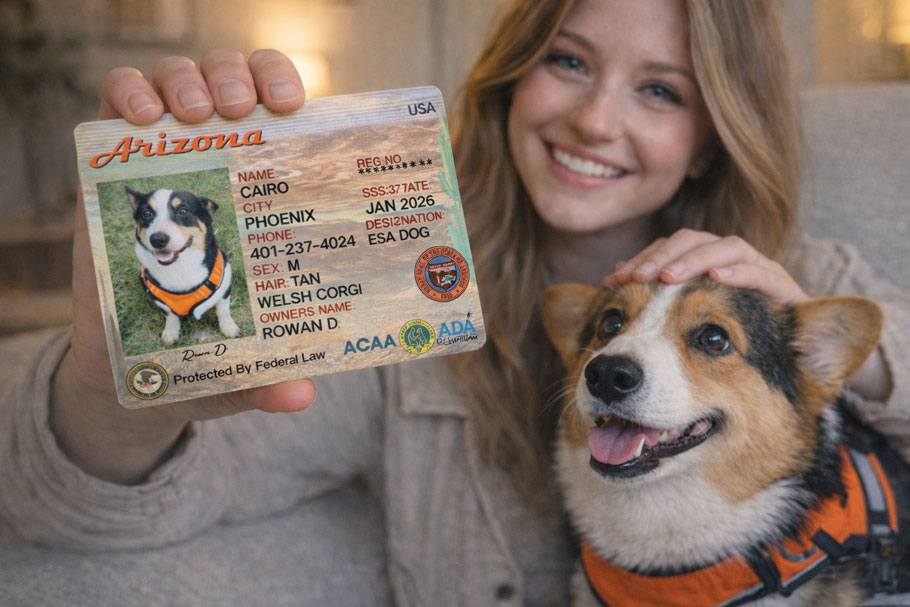
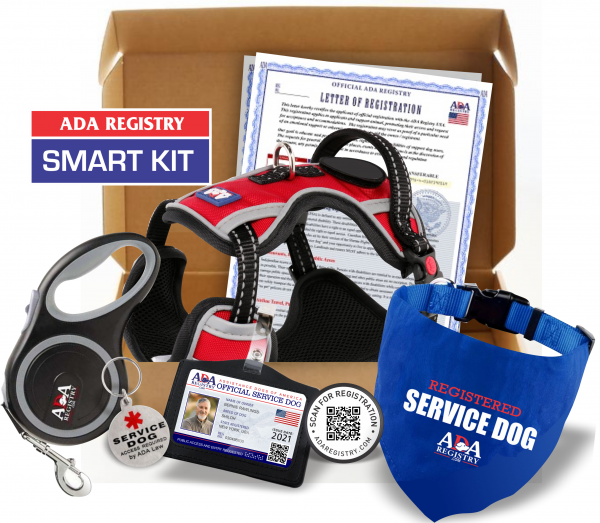
Many people searching “register my dog” are shown websites selling certificates, ID cards, or vests. These are not a substitute for a local dog license, and they generally do not create service dog rights. If your goal is compliance in Robertson County, focus on the official local offices listed above.
Service Dog Laws in Robertson County, Tennessee
Service Dogs Under the ADA: Training and Tasks (Not Registration)
In public places (stores, restaurants, many government buildings), federal ADA rules generally define a service animal as a dog individually trained to do work or perform tasks for a person with a disability. The dog’s legal status comes from its training and the handler’s disability-related need—not from a purchased “registration.”
What Businesses Are Allowed to Ask
When it isn’t obvious what the dog does, staff are generally limited to two questions: whether the dog is required because of a disability and what work or task the dog has been trained to perform. They typically cannot demand medical records, demand a special ID card, or require proof of training as a condition of entry (though the dog must be under control and housebroken).
Local Dog Licensing Still Applies
Even if your dog is a legitimate service animal, local requirements like rabies vaccination and a dog license in Robertson County, Tennessee can still apply. The ADA generally does not exempt service dogs from neutral public health and safety rules that apply to all dogs in the jurisdiction (for example, rabies vaccination requirements or leash/running-at-large rules).
Service Dog Gear (Vests, Patches, ID)
A vest can help reduce confusion, but it’s not always legally required. If you choose to use gear, treat it as optional identification for smoother interactions—not as “proof” that replaces local licensing or rabies documentation.
Emotional Support Animal Rules in Robertson County, Tennessee
ESAs Are Not the Same as Service Dogs
An emotional support animal (ESA) may provide therapeutic benefit through companionship and emotional support, but ESAs are generally not service animals under the ADA for public-access purposes. That means an ESA generally does not have the same right to enter places where pets are not allowed (like most restaurants or grocery stores).
Where ESAs Commonly Matter: Housing
ESAs are most commonly addressed under housing rules. Federal fair housing guidance describes “assistance animals” as including animals that perform tasks or provide emotional support that alleviates one or more identified effects of a disability. If you are requesting an accommodation from a housing provider, the housing provider may be required to consider the request under applicable fair housing rules.
Local Licensing and Rabies Requirements Still Apply
Even when an ESA is permitted as a housing accommodation, local animal control rules can still apply. You should still plan to meet neutral requirements such as current rabies vaccination and any local tag or animal control dog license Robertson County, Tennessee process required where you live.
Avoid “ESA Registration” Scams
Many online vendors sell ESA “registrations,” certificates, or ID cards. These are not the official local licensing systems for Robertson County, and they do not replace a rabies certificate or local dog tag. If you are unsure what your landlord can request, focus on legitimate documentation from a licensed health professional (as applicable) and keep your dog compliant with local licensing requirements.
Frequently Asked Questions
There typically isn’t a special county “service dog registration” that creates service dog rights. Service dog status for public access is based on ADA rules (a dog trained to perform disability-related tasks). However, you may still need a standard dog license in Robertson County, Tennessee (or city license/tag) and proof of rabies vaccination, depending on where you live in the county.
If you live within Springfield city limits, start with Springfield Animal Control for city ordinance questions and local requirements. If you’re unsure whether the city or county process applies, ask the office to confirm jurisdiction for your address and whether they require a city tag, county tag, or rabies documentation as your “registration.”
Not always. In some places, the rabies tag functions as the practical “registration” indicator; in others, the city or county issues a separate license tag. In any case, current rabies vaccination is central to compliance and is commonly required for licensing, reclaiming an impounded animal, and responding to enforcement actions.
Generally, ADA guidance limits what staff can ask when the service dog’s role isn’t obvious. Typically, they may ask whether the dog is required because of a disability and what task the dog is trained to perform. They generally cannot require you to show “registration papers” or a special ID card as a condition of entry. The dog must still be under control and housebroken.
Generally, no. Emotional support animals are usually addressed under housing rules (reasonable accommodation) rather than broad public access rules. If you’re trying to be compliant locally, focus on your local dog license/rabies requirements first, and treat “ESA documentation” as a separate issue related to housing.
- Does my address fall in city limits or unincorporated county?
- What documents are required for a license or tag (rabies certificate, ID, proof of residency)?
- Is the license annual or multi-year? Is it separate from the rabies tag?
- Where do I pay the fee and pick up the tag?
- If my dog is a service dog or ESA, are there any different steps for licensing? (Usually no—standard rules still apply.)
Local Compliance Reminder
If your goal is to be fully compliant when someone asks, “Do you have your dog registered?”, the best approach is usually: keep current rabies documentation, obtain any required local tags, and keep your dog under control per local ordinances—regardless of whether your dog is a pet, a trained service dog, or an emotional support animal.
Register A Dog In Other Tennessee Counties
Select your county below to get started with your dog’s ID card. Requirements and license designs may vary by county, so choose your location to see the correct options and complete your pup’s registration.
- Anderson County Dog Registration
- Bedford County Dog Registration
- Benton County Dog Registration
- Bledsoe County Dog Registration
- Blount County Dog Registration
- Bradley County Dog Registration
- Campbell County Dog Registration
- Cannon County Dog Registration
- Carroll County Dog Registration
- Carter County Dog Registration
- Cheatham County Dog Registration
- Chester County Dog Registration
- City of Hartsville County Dog Registration
- City of Lynchburg County Dog Registration
- City of Nashville County Dog Registration
- Claiborne County Dog Registration
- Clay County Dog Registration
- Cocke County Dog Registration
- Coffee County Dog Registration
- Crockett County Dog Registration
- Cumberland County Dog Registration
- Davidson County Dog Registration
- Decatur County Dog Registration
- DeKalb County Dog Registration
- Dickson County Dog Registration
- Dyer County Dog Registration
- Fayette County Dog Registration
- Fentress County Dog Registration
- Franklin County Dog Registration
- Gibson County Dog Registration
- Giles County Dog Registration
- Grainger County Dog Registration
- Greene County Dog Registration
- Grundy County Dog Registration
- Hamblen County Dog Registration
- Hamilton County Dog Registration
- Hancock County Dog Registration
- Hardeman County Dog Registration
- Hardin County Dog Registration
- Hawkins County Dog Registration
- Haywood County Dog Registration
- Henderson County Dog Registration
- Henry County Dog Registration
- Hickman County Dog Registration
- Houston County Dog Registration
- Humphreys County Dog Registration
- Jackson County Dog Registration
- Jefferson County Dog Registration
- Johnson County Dog Registration
- Knox County Dog Registration
- Lake County Dog Registration
- Lauderdale County Dog Registration
- Lawrence County Dog Registration
- Lewis County Dog Registration
- Lincoln County Dog Registration
- Loudon County Dog Registration
- Macon County Dog Registration
- Madison County Dog Registration
- Marion County Dog Registration
- Marshall County Dog Registration
- Maury County Dog Registration
- McMinn County Dog Registration
- McNairy County Dog Registration
- Meigs County Dog Registration
- Monroe County Dog Registration
- Montgomery County Dog Registration
- Moore County Dog Registration
- Morgan County Dog Registration
- Obion County Dog Registration
- Overton County Dog Registration
- Perry County Dog Registration
- Pickett County Dog Registration
- Polk County Dog Registration
- Putnam County Dog Registration
- Rhea County Dog Registration
- Roane County Dog Registration
- Rutherford County Dog Registration
- Scott County Dog Registration
- Sequatchie County Dog Registration
- Sevier County Dog Registration
- Shelby County Dog Registration
- Smith County Dog Registration
- Stewart County Dog Registration
- Sullivan County Dog Registration
- Sumner County Dog Registration
- Tipton County Dog Registration
- Trousdale County Dog Registration
- Unicoi County Dog Registration
- Union County Dog Registration
- Van Buren County Dog Registration
- Warren County Dog Registration
- Washington County Dog Registration
- Wayne County Dog Registration
- Weakley County Dog Registration
- White County Dog Registration
- Williamson County Dog Registration
- Wilson County Dog Registration